
Bird flu is back in the headlines as autumn migration and fresh poultry detections put biosecurity under renewed scrutiny. England introduced mandatory housing measures from 13 November 2026 for specified poultry and captive-bird keepers, while Germany reported H5N1 at a small poultry holding on 10 November and Japan confirmed its first farm outbreak of the season on 12 November. These developments do not mean every country faces the same risk or rules. They do show why a well-organised poultry farm biosecurity routine is essential before disease reaches a flock.
Avian influenza, commonly called bird flu, is a group of influenza A viruses affecting domestic and wild birds. Highly pathogenic avian influenza (HPAI) can cause severe disease and rapid losses in poultry. The most effective farm-level defence is to reduce the ways the virus can enter, recognise unusual changes quickly and contact veterinary authorities before moving birds, eggs, litter or equipment.
Why poultry biosecurity matters this season
The Food and Agriculture Organization’s global avian influenza situation update dated 22 October 2026 records recent detections in wild birds, poultry and other animals across several regions. In Europe, the UK government’s latest England situation page lists new H5N1 confirmations in poultry during November. The UK’s 11 November announcement introduced an England-wide prevention zone, with housing measures taking effect at 00:01 on 13 November for keepers covered by the rules.
In Germany, Reuters reported on 10 November that H5N1 had been confirmed at a small holding in Brandenburg with about 160 ducks, geese and chickens. Japan confirmed its first farm case of the season on 12 November and began culling about 200,000 chickens as part of the response. These are country-specific events, not a forecast for every poultry area. Producers should follow their own veterinary authority’s alerts and restrictions rather than copying another country’s rules.
How bird flu can reach a poultry house
Infected birds can shed virus in faeces and respiratory secretions. Infection may spread through direct contact, but a flock can also be exposed indirectly when contaminated material reaches feed, drinking water, bedding, footwear, clothing, vehicles, crates or tools. Wild waterfowl and other wild birds can carry viruses into areas where domestic poultry are kept. The World Organisation for Animal Health (WOAH) explains that avian influenza viruses can persist in the environment, particularly under cool conditions, and that contaminated equipment can help move infection between farms.
This means a farm does not need to have direct contact with a visibly sick wild bird to face a risk. A visitor’s boots, a feed spill attracting wild birds, a shared egg tray or a vehicle that has crossed a contaminated area can all weaken the farm’s biosecurity barrier.
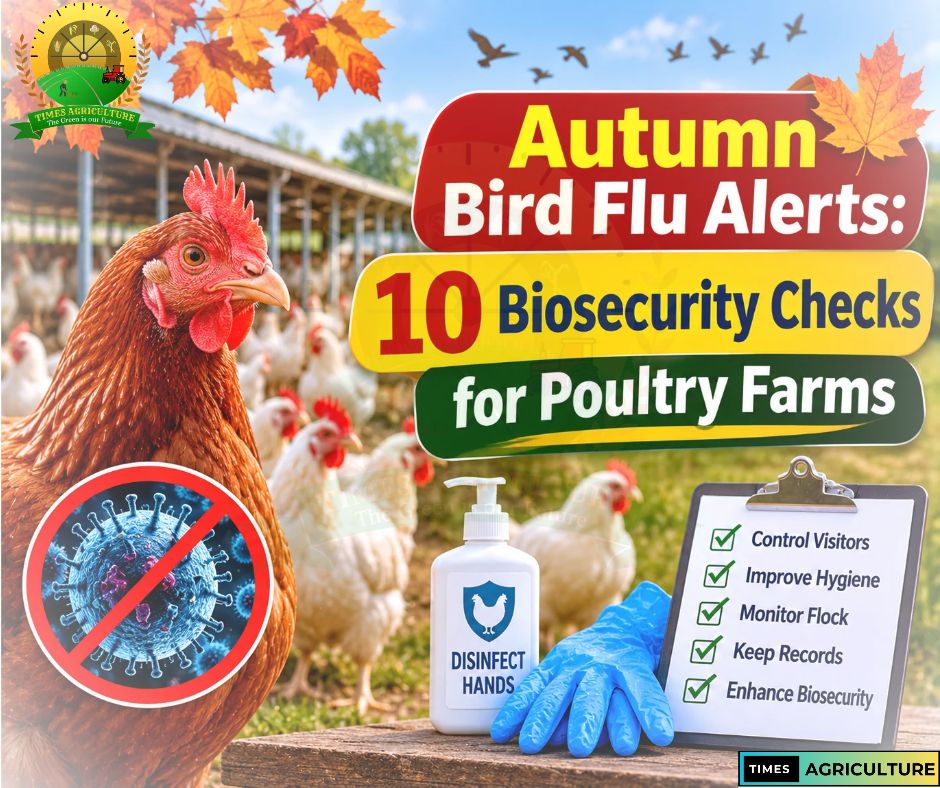
10 biosecurity checks to make on every poultry unit
1. Control who and what enters the farm
Keep the poultry area separate from public roads, household activity and other livestock wherever the layout allows. Close gates, display a simple visitor notice and allow entry only for essential work. Record visitors, vehicles, deliveries and the purpose of each visit. Ask staff and contractors to disclose recent contact with other poultry farms, live-bird markets, shows or bird gatherings. Where a visit is essential, require clean clothing and footwear before entering the poultry area.
2. Create a clear clean-to-dirty boundary
Mark a line between the outside area and the bird house. Keep dedicated boots, coveralls and basic cleaning supplies on the clean side. Do not walk from a vehicle yard, manure area or another poultry shed straight into the flock area in the same footwear. On larger farms, use separate work zones and move from younger or healthier groups towards higher-risk areas, not the other way around. A simple physical boundary is more reliable than a sign that nobody follows.
3. Use farm-only footwear and clothing
Provide boots and overalls that are used only in the poultry unit. Remove visible mud, manure and litter before disinfection because organic matter can reduce the effectiveness of disinfectants. Use products approved for the intended purpose, prepare them at the label concentration and observe the required contact time. Replace dirty or diluted footbath solution as directed; a footbath filled with muddy water is not a dependable barrier. Wash hands before and after handling birds, eggs or equipment.
4. Keep wild birds away from poultry, feed and water
Repair holes in poultry-house walls, doors and roof spaces. Fit suitable netting or screens where wild birds can enter, while ensuring ventilation is not restricted. Keep feed bins closed, clear spilled grain promptly and store bedding under cover. Do not leave feed or water where wild birds can gather. Remove standing water around houses where practical, repair leaking pipes and prevent wild birds from reaching ponds or water tanks close to poultry activity.
Do not handle sick or dead wild birds yourself. Keep people, pets and farm animals away and report unusual wild-bird deaths to the relevant wildlife or veterinary authority. Local authorities can advise on safe collection and testing.
5. Protect the water supply
Use a clean, protected water source and maintain drinkers so that faeces, litter and surface runoff cannot contaminate them. Prevent wild birds from accessing storage tanks and open troughs. Clean drinkers on a routine schedule and check for leaks that create wet areas around the house. USDA’s Animal and Plant Health Inspection Service advises poultry keepers not to use untreated surface water for birds or for cleaning poultry facilities because it may carry contamination from wildlife. Follow local veterinary and water-quality guidance when selecting or treating a water source.
6. Clean and disinfect tools, crates and vehicles
Assign equipment to individual sheds or production units wherever possible. Avoid borrowing or lending crates, cages, shovels, egg trays and catching equipment between farms. First remove litter, manure and other visible dirt; then wash and disinfect according to the product label. Give particular attention to vehicle tyres, wheel arches, loading areas and equipment that enters poultry housing. Keep clean equipment dry and protected after disinfection so it is not immediately contaminated again.
7. Separate species and manage new arrivals carefully
Keep chickens separate from ducks, geese and other bird species where possible. Mixed flocks make it harder to control contact and monitor disease. Do not introduce birds of unknown health status directly into an established flock. Use a separate quarantine area and a period set with a poultry veterinarian or local animal-health service; the correct protocol depends on the disease situation, species and local rules. Keep separate feeders, drinkers and tools for the isolation area, and handle those birds after the main flock.
8. Watch the flock every day and keep records
Make at least one deliberate health check during each daily round, and increase observation frequency when local alerts or unusual wild-bird activity raise concern. Record normal mortality, feed and water use, egg numbers and any changes in behaviour. Early warning signs can include sudden or unexplained deaths, reduced appetite, lower egg production, soft-shelled or misshapen eggs, breathing difficulty, nasal discharge, swelling or purple discolouration of the comb and wattles, diarrhoea, or loss of coordination.
One sign alone cannot confirm avian influenza. Similar symptoms can occur with other poultry diseases, so do not diagnose the cause by appearance or wait for several signs to develop. Compare daily records with the flock’s normal pattern and contact a veterinarian promptly when changes are sudden or unusual.
9. Prepare a response plan before a suspected case
Write down the contact details for the farm veterinarian, local livestock or animal-health office, diagnostic laboratory and relevant emergency authority. Decide who will stop visitors, secure gates, record movements and communicate with staff if disease is suspected. Keep a current list of bird numbers, sheds, suppliers, recent deliveries and movements. A written plan reduces confusion when fast decisions are needed.
If you suspect bird flu, stop non-essential movement of birds, eggs, manure, litter, vehicles and equipment. Do not sell, give away, slaughter, transport or dispose of birds on your own initiative. Contact the veterinary authority immediately and follow its instructions on sampling, isolation, movement restrictions and disposal. Do not attempt to conceal a sudden mortality event or treat it as an ordinary production problem.
10. Maintain welfare if birds must be housed
Housing can reduce contact with wild birds when it is required by an official order, but it must not create a new welfare problem. Avoid overcrowding, maintain good ventilation and dry litter, provide enough clean water and feed, and check birds more than once a day. Monitor temperature at bird level and make sure the flock receives an appropriate day-and-night light pattern. Add suitable enrichment where birds are confined for extended periods. The UK government’s guidance on housing birds safely gives practical welfare advice for keepers in Great Britain; local welfare standards and legal requirements may differ elsewhere.
What small and backyard poultry keepers can do first
Small farms do not need a complicated building project to improve protection. Start with a secure feed store, covered drinkers, a clean pair of poultry-only boots, a handwashing point and a rule that visitors do not enter the bird area without permission. Keep household poultry away from wild-bird feeding spots and do not allow children to carry equipment between neighbouring flocks. If birds are kept in a backyard, use a covered run or other locally approved barrier that prevents direct contact with wild birds while allowing adequate airflow and space.
For commercial units, review the farm’s written biosecurity plan with a poultry veterinarian. USDA-APHIS offers free biosecurity resources for small and backyard flock owners in the United States, as well as voluntary assessment programmes for eligible larger operations. Producers in Pakistan, India, Europe and other regions should contact their provincial or national livestock and veterinary services for current reporting channels, local disease alerts and any movement or housing orders.
Vaccination is not a substitute for biosecurity
Vaccination policy varies by country, poultry sector and disease situation. Where vaccination is permitted or directed, it should be part of an official programme designed and monitored by veterinary authorities. Vaccinated birds still require surveillance and strong hygiene because vaccination does not prevent every infection or remove the risk of virus movement through contaminated equipment, people or vehicles. Do not buy or administer vaccines independently without veterinary approval and a clear local protocol.
A simple daily poultry biosecurity routine
- Before entering: check gates, footwear, clothing and the visitor log.
- At the house: inspect screens, doors, feed stores, drinkers and signs of wild-bird access.
- During the flock check: record deaths, appetite, water use, egg production and unusual behaviour.
- After handling birds: clean tools, remove visible dirt, disinfect as directed and wash hands.
- At the end of the round: secure feed and bedding, remove attractants for wild birds and report any suspicious change promptly.
Conclusion: make prevention part of everyday flock management
Bird flu response often receives attention after an outbreak, but the most useful work happens before the first sick bird appears. Controlled access, clean footwear, protected feed and water, separate equipment, daily records and rapid reporting form the foundation of poultry farm biosecurity. Review these measures with a veterinarian, adapt them to the farm’s layout and follow current local orders. Consistent routines are more effective than last-minute action when infection is already suspected.
Times Agriculture: The Green is Our Future